
Documentation index · Architecture
UML: the key contracts

The UML shows an excerpt of the Go contracts, not a complete API reference. Method signatures are shortened for readability, error returns in particular. In Go, implementation is implicit through method sets. The authoritative, complete definition is model.go.
auth.Authenticator separates credential checking from protocol processing.
Authenticate returns the canonical account; Lookup resolves LMTP recipients
without a user password. ErrInvalid and ErrTemporary are different
results: a backend outage must not count as a definitely wrong password.
With Nauthilus the authenticator is layered
MasterUser{Cache{Nauthilus}}: the master-user check, then the auth
cache (internal/auth/cache.go: answers from memory, one shared backend
call for identical concurrent requests, flushed across the cluster
through the flush log auth-flush in the admin namespace), then the
Nauthilus client.
model.User is an account-bound view of mailboxes, messages,
scripts, metadata and quotas. The caller must call Close().
Watches and leases have lifecycles of their own; a lost lease requires
protected changes to stop. The in-memory store is a test backend,
not proof of the error semantics of distributed RADOS operations.
The actual store types and adapters are in cephstore/store.go, memstore.go and main.go.
Processes
One image, three long-running commands: shardpost serve is the server
with every protocol listener, the admin API and — with workers.run
(the default) — the background workers; with workers.run: false it is
a front-end that keeps the APIs and the writers of the queues and runs
no worker. shardpost runner (0.52.0) is the background workers without
listeners: the job runner with the expiry and fts_due workers, the
upload expiry, the delayed submission worker and the learning worker,
registered with the role runner. shardpost push (0.52.0, partitioned)
is the JMAP push worker, a deployment of its own. The short-lived
commands (scrub, backfills, the system tools) register for their run.
Startup and shutdown
loadConfigselects the file and the subcommand;config.Loadmerges defaults, YAML and explicitly set environment values and validates them (config.LoadRunnerfor the runner leaves the authentication secrets unread).- Once the configuration is valid, the JSON logger is set up with the chosen
level.
config checkends here without opening any services. runsets up signal handling and telemetry. Ceph access comes from the configuration or from the Rook secret made readable through RBAC.- The store and the authenticator are opened; TLS keys, the Sieve and program configuration and the optional learning worker are connected.
- The mail listeners and the HTTP endpoints are started. Without TLS configuration, no implicit TLS listeners are started.
- On shutdown, readiness is disabled first. After a short propagation delay, services are stopped and IMAP/POP3 are drained within limits. Workers and tracing are stopped through the designated teardown functions.
/healthz reports that the HTTP process is responding. /readyz additionally
checks the drain state and Ceph reachability. Neither endpoint fully checks
Nauthilus, Sieve, the learning target or mailbox access.
Login and session correlation
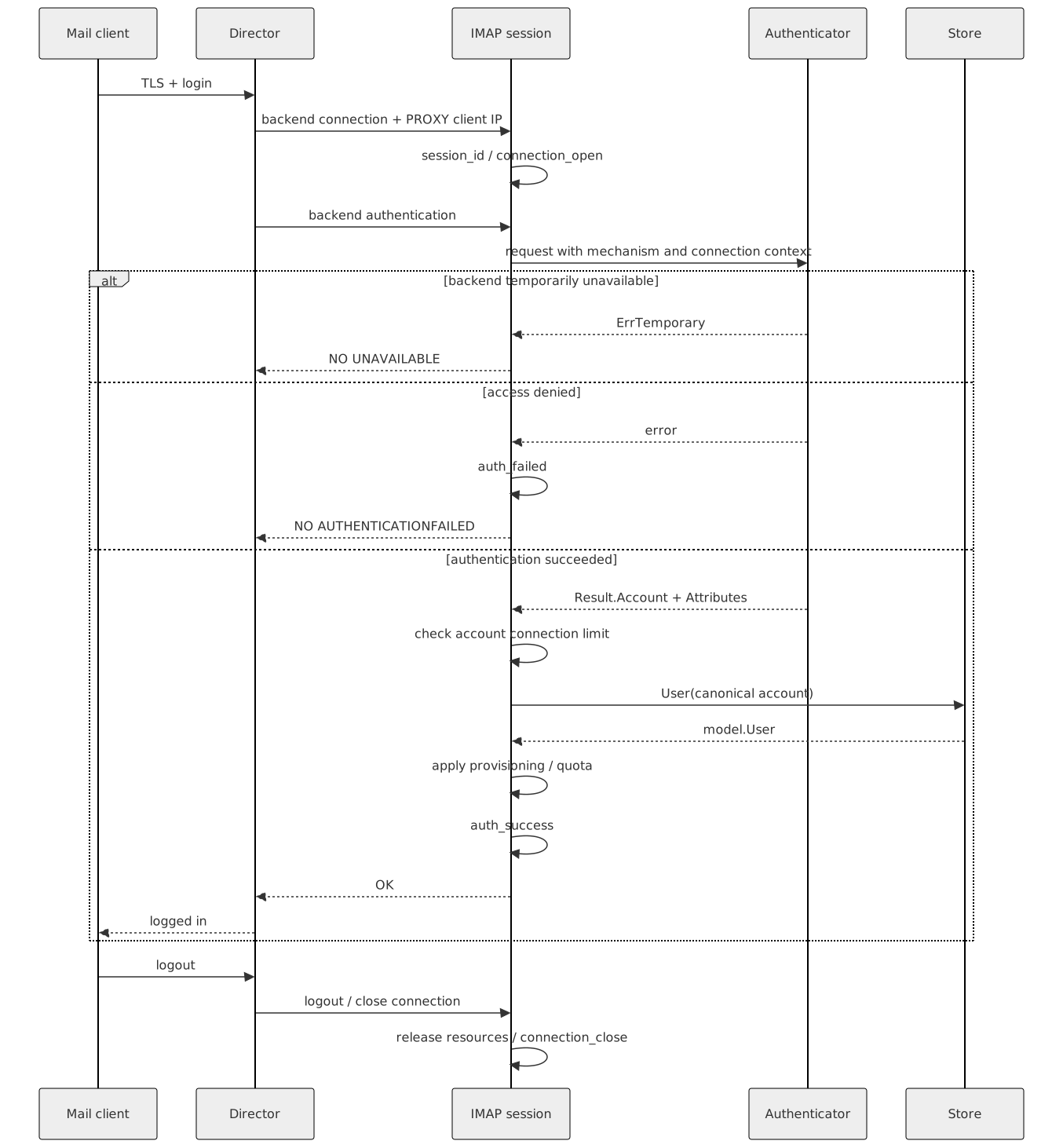
The diagram shows the backend path; the director and Nauthilus may perform further checks in the frontend. The concrete backend login depends on the director contract (for example master user or bearer replay). The server only opens the account-bound store view after successful authentication and the account limit check. Storage errors can still prevent a login after the identity has been verified successfully.
Entry points: newConn, serve, handleLine, authenticate,
finishLogin in imapproto/conn.go.
SASL decoding lives in auth/sasl.go,
backend selection in cmd/shardpost/auth.go.
IMAP states

The selected mailbox, the sequence numbers and the watches belong to the session.
SELECT/EXAMINE load a view; EXAMINE is read-only.
CLOSE may expunge marked messages, UNSELECT only ends the
selection. End of transport and shutdown can occur in any state.
The diagram condenses these abort paths into a transition to Logout.
UNAUTHENTICATE releases the account state and the watches but keeps the
transport and the logging session ID. A subsequent login must not inherit any
user attributes of the previous identity. IDLE is a waiting state here
within the selected mailbox, not an additional authentication status.
LMTP delivery
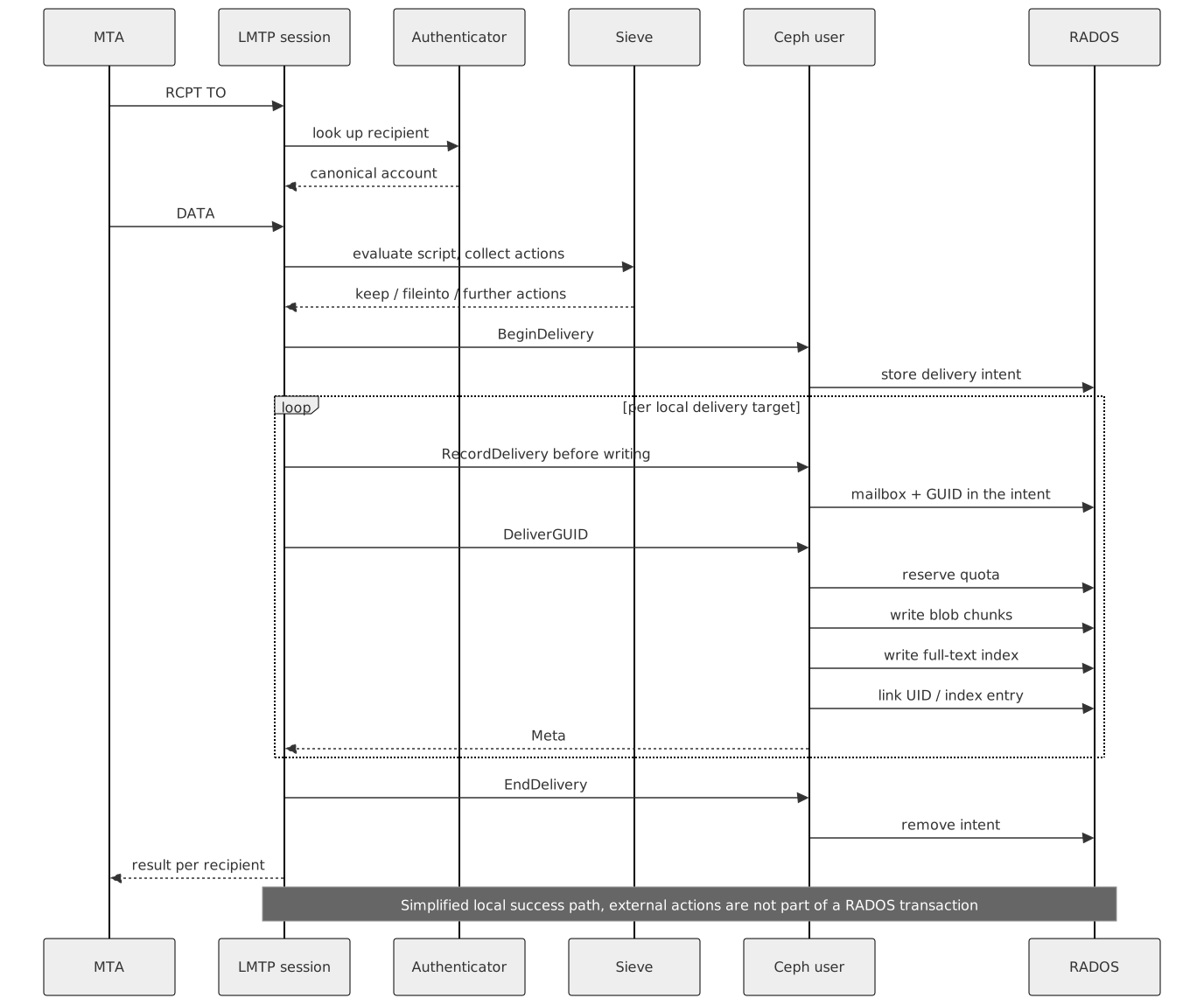
Recipient resolution happens before DATA. LMTP can return different results for
individual recipients. Sieve produces an action plan;
several local targets are held together by one delivery intent.
RecordDelivery stores the mailbox and the pre-selected GUID before the
message is written. Only a successful EndDelivery permits the
positive completion intended for it.
The figure shows the local success path. Reject, discard, pipe,
redirect, vacation and notify have rules of their own. External effects
cannot be undone by a RADOS rollback. The complete
flow including the error paths is in
lmtpd.go (LMTPData, per-recipient
status) and in the shared delivery service
internal/delivery (Sieve, storing,
rollback, relay helpers), which the local delivery of the
Admin API uses as well.
Events and learning jobs

For the prepared learning path, an independent copy of the message is persisted before the target commit. Commit receipts connect the learning job and the visible mailbox change. The worker checks them before the external call. An EXPUNGE therefore cannot invalidate the already persisted learning copy.
Delivered separates external success from later cleanup. Even so,
a crash window remains between external success and recording it:
the call can be repeated. Exactly-once is not guaranteed.
Dead jobs are not successful jobs and require an operator decision.
The illustration focuses on Prepare/commit receipts. The code
also contains Enqueue for jobs queued directly without a prepared phase.
Details: learning.go,
RADOS queue,
Sieve behavior.
Rendered from docs/architecture/runtime.md in the ShardPost repository.